
Heavy Weather Seamanship: Storm Tactics and Safety Discipline
Offshore sailing in heavy weather strips away illusions faster than any other test at sea. When the barometer plunges and the wind builds past 35 knots, the difference between a manageable blow and a dangerous ordeal often comes down to decisions made hours earlier. Experienced crews treat every forecast as a contract: reef early, stay rested, and never let the boat get ahead of the crew. That discipline turns survival into seamanship.
Reefing is not a sign of weakness; it is the foundation of the sail-plan ladder. Start with the first reef in the main at 25 knots apparent, move to the second at 32, and consider the third or trysail by 40. Headsails follow the same logic: swap the genoa for the working jib before the bow buries itself. The ladder keeps the boat balanced, reduces heel, and prevents the autopilot from working overtime. Skip a rung and the motion becomes violent, fatigue sets in, and small mistakes compound.
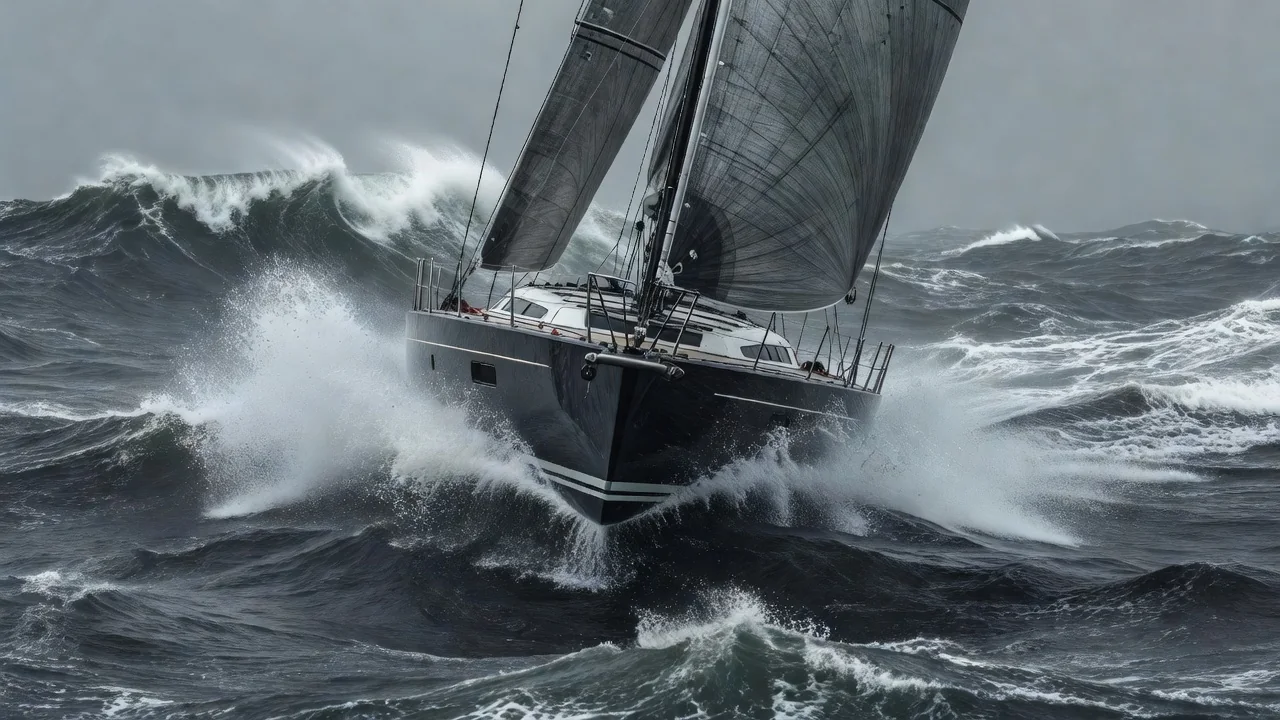
Choosing the Right Storm Tactic
Once winds exceed 45 knots, the crew must decide whether to heave-to, run off, or lie ahull. Heaving-to offers a stable platform for rest but demands a sea-room buffer. Running off with a drogue keeps the boat tracking downwind and reduces the risk of broaching, yet it demands constant attention to steering. A series drogue becomes the tool of choice when conditions turn extreme: deployed from the stern, its many small cones create graduated drag that slows the boat without locking the rudder. Deploy too early and you lose ground unnecessarily; wait too long and the boat may surf uncontrollably into breaking seas.
Cockpit and companionway discipline prevents most accidents. The rule is simple: one hand for the ship, one for yourself. All hatches stay dogged, the washboards are in place above the lowest companionway step, and the lifelines remain taut. At night, no one leaves the cockpit without a full harness clipped to a jackline that runs from the companionway to the bow pulpit. Tethers must be short enough to prevent a crewmember from reaching the rail when clipped in at the helm.
Man Overboard Prevention and Recovery
Prevention beats recovery every time. Jacklines should be positioned inside the shrouds so a fallen sailor stays on deck. Harnesses need quick-release hooks and two tethers: one short for the cockpit, one longer for moving forward. Night routines include buddy checks every 30 minutes and mandatory headlamps with red beams. Recovery drills, practiced in daylight and repeated in moderate conditions, must cover the Quick-Stop maneuver, deploying the Lifesling, and hauling a waterlogged body back aboard with the help of a block and tackle or the mainsail halyard.
- Practice MOB recovery every passage, rotating roles so every crewmember knows the drill blindfolded.
- Keep the cockpit clear of loose gear that can become projectiles or trip hazards.
- Review watch schedules so no one stands more than four hours in heavy weather.
- Stow all loose items below before leaving harbor; chaos below accelerates panic above.
| Wind Speed (kts) | Recommended Tactic | Key Gear |
|---|---|---|
| 25–35 | Deep reefs, working jib | Jacklines, harnesses |
| 35–45 | Heave-to or run with drogue | Series drogue, storm jib |
| 45+ | Series drogue or bare poles | EPIRB, ditch bag ready |
The Mental Game
The loudest part of a gale is often inside the skipper’s head. Waves crash, the rigging screams, and every creak sounds like structural failure. Staying calm is a practiced skill. Crews that talk through scenarios in the saloon before the weather arrives build confidence. Short, clear commands replace long explanations. A hot meal and dry socks at the change of watch do more for morale than any pep talk. When the boat is properly prepared and the crew trusts their routines, fear gives way to focused attention. The storm still roars, but the mind remains steady.
Heavy weather seamanship is never about bravado. It is the quiet accumulation of small, correct decisions made long before the first wave breaks over the bow. Reef early, clip in religiously, know your tactics, and keep fear in its proper place: acknowledged, but never in command. The sea will test you regardless; preparation simply determines whether you pass the exam.