
Seasickness and Crew Health: Managing the First 72 Hours
Seasickness is the most common medical event in offshore sailing and the least discussed honestly. Roughly nine out of ten sailors feel some symptoms in the first days of a passage, and one in three will be fully incapacitated for a stretch. The condition is usually dismissed as a joke until it is not: a vomiting, dehydrated crew member who cannot keep fluids down for 24 hours becomes a genuine medical case, and a watch system built for four people collapses fast when two of them are horizontal. Managing seasickness is not about stoicism; it is a logistical problem with proven solutions, and the crews that take it seriously sail faster and safer from day one.
The Physiology in Two Paragraphs
Seasickness is a sensory conflict: the inner ear reports motion the eyes cannot confirm below deck, and the brain, suspecting poisoning, triggers nausea as an evacuation response. That is why the horizon cures and the galley kills. Symptoms follow a reliable arc, from yawning and cold sweats through pallor to vomiting, and most sailors adapt within 48 to 72 hours as the brain recalibrates. The practical window is therefore the first three days, and every strategy aims to get the crew through that window hydrated, fed and still able to stand a watch.
Medication: Start Before the Boat Moves
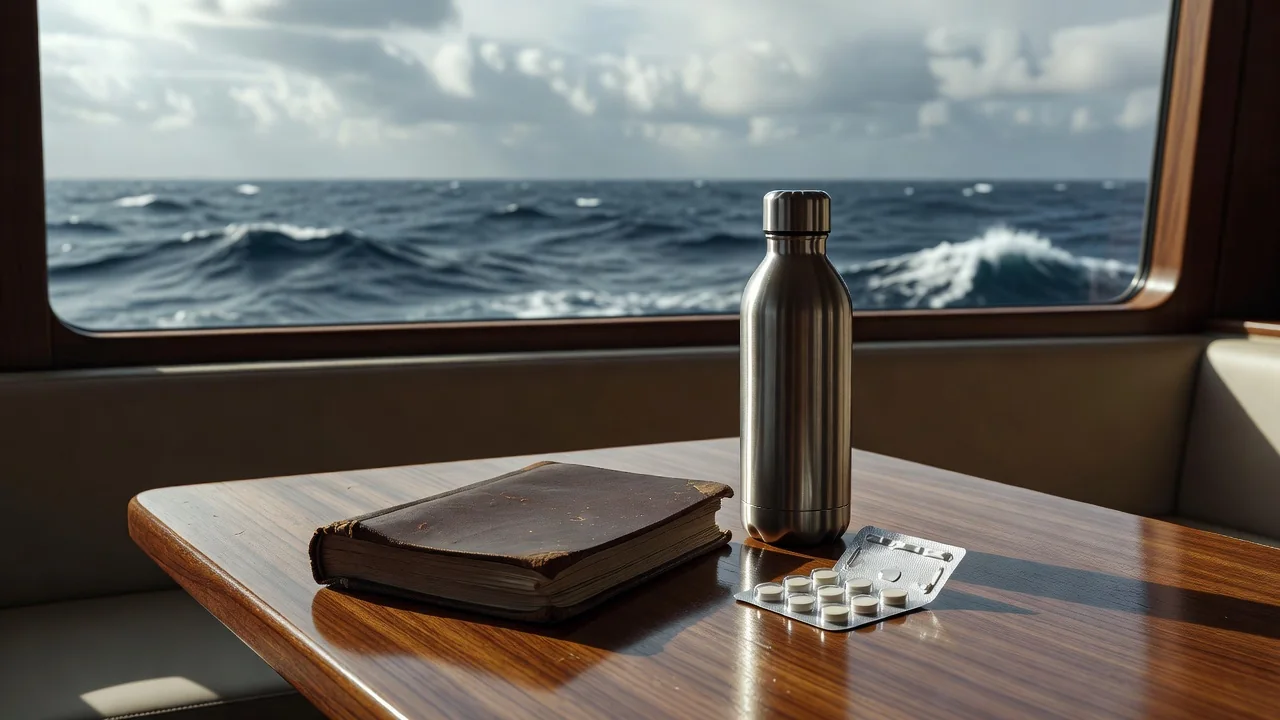
The single most common medication error is taking the first pill after the first wave. Most remedies work prophylactically and poorly once vomiting has begun. Scopolamine patches applied behind the ear four to six hours before departure remain the heavyweight option, effective for up to three days, though side effects include dry mouth, blurred vision and, in a minority, confusion that forces removal. Over-the-counter options such as meclizine and dimenhydrinate work well for milder cases and are best started the evening before departure. For the established case where nothing stays down, anti-nausea suppositories or ondansetron tablets that dissolve on the tongue bypass the stomach entirely, which is exactly the point.
- Trial any medication at anchor first; side effects at sea are unwelcome research.
- Dose on a schedule, not on symptoms; the goal is prevention, not rescue.
- Keep suppositories in the medical kit for the crew member past the oral stage.
- Log what each person took and when, so doses are never doubled in the fog of day two.
Hydration and Food: Small, Constant, Boring
The seasick stomach rejects volume and accepts sips. The working protocol is a litre bottle within arm's reach and a sip every five minutes, adding up to two litres a day even through nausea. Electrolyte powders matter more than food in the first 24 hours, because vomiting drains sodium and potassium faster than hunger drains calories. When appetite returns, it returns to bland carbohydrates: crackers, plain rice, ginger biscuits, and the universal offshore truth that cold food smells less and therefore stays down better. Ginger in any form, capsules, tea or candy, has enough clinical support to earn locker space, and costs almost nothing.
| Stage | Symptoms | Action |
|---|---|---|
| Pre-departure | None | Patch or first dose, light meal, no alcohol |
| Hours 0–24 | Yawns, sweats, nausea | Horizon time, sips, crackers, helm duty helps |
| Days 1–3 | Peak symptoms or adaptation | Suppositories if vomiting persists, watch duty short |
| Day 3 onward | Adaptation for most | Normal meals resume, taper medication |
When It Stops Being a Joke
The red flags are medical, not maritime: no urine output for twelve hours, vomiting that survives every intervention past the 24-hour mark, confusion, or a crew member too weak to move to the heads unaided. At that point the problem is dehydration and electrolyte collapse, and the response is aggressive rehydration in small sips, telemedicine contact if available, and honest consideration of shortening the leg or seeking shelter. Skippers should also watch the knock-on effect: a boat effectively short-handed by sickness needs its watch system rebuilt immediately, not after the remaining crew are exhausted too.
The veterans' summary is unglamorous: medicate early, sip constantly, keep the sufferer on deck where the horizon works, and treat the third day as the promised land it usually is. The sea grants almost everyone their sea legs eventually. The skill is arriving at day four with the crew intact.